
Sue Bee® Honey Oatmeal Cups
Ingredients
Batter
4 cups old fashioned oats
1½ tsp ground cinnamon
1 tsp baking powder
1/2 tsp salt
2⅓ cup unsweetened almond milk
1/3 cup Sue Bee® Baking Honey
Lemon Poppyseed
2 tsp lemon zest
2 tsp lemon juice
2 tsp poppyseeds
Orange Cranberry
1 cup dried cranberries
2 tsp orange zest
2 tsp orange juice
1/2 cup chopped walnuts, optional
Peanut Butter Banana
2 large bananas, mashed
1/2 cup peanut butter
Apple Cinnamon
2 tsp vanilla extract
1 cup small diced apple
Directions
Pre-heat oven to 375 F.
Add all ingredients to a large bowl and mix well until everything is combined.
Spray a muffin tin with cooking spray and scoop oatmeal mixture in using a large cookie scoop or a 1/4 measuring cup.
The mixture will be slightly watery, so mix well between each scoop.
Bake for 20–25 minutes, or until cooked through.
Monster Cookie Ice Cream Sandwiches
Ingredients
1 dozen Sue Bee® Monster Honey Cookies
1 gallon vanilla ice cream
3/4 cup M&M’s Minis
Directions
Place one scoop of ice cream onto bottom side of two cooled cookies.
Press cookies together to form a cookie ice cream sandwich.
Roll cookie ice cream sandwich into shallow bowl of M&M’s Minis until the ice cream is covered in M&M’s Minis.
Place sandwich cookies on cookie sheet and freeze until firm, or about 1 hour.
Honey Oatmeal Cups
Ingredients
Blueberry Almond
4 cups old fashioned oats
1½ tsp ground cinnamon
1 tsp baking powder
1/2 tsp salt
2⅓ cup unsweetened almond milk
1/3 cup Sue Bee® Baking Honey
2 tsp vanilla extract
1 cup blueberries, fresh or frozen
1/2 cup sliced almonds
Lemon Poppy Seed
4 cups old fashioned oats
1½ tsp ground cinnamon
1 tsp baking powder
1/2 tsp salt
2⅓ cup unsweetened almond milk
1/3 cup Sue Bee® Baking Honey
2 tsp vanilla extract
2 tsp lemon zest
2 tsp lemon juice
2 tsp poppy seeds
Orange Cranberry
4 cups old fashioned oats, gluten free certified if necessary
1½ tsp ground cinnamon
1 tsp baking powder
1/2 tsp salt
2⅓ cup unsweetened almond milk
1/3 cup Sue Bee® Baking Honey
2 tsp vanilla extract
1 cup dried cranberries
2 tsp orange zest
2 tsp orange juice
1/2 cup chopped walnuts, optional
Peanut Butter Banana
4 cups old fashioned oats
1½ tsp ground cinnamon
1 tsp baking powder
1/2 tsp salt
2⅓ cup unsweetened almond milk
2 tsp vanilla extract
1/3 cup Sue Bee® Baking Honey
2 large bananas, mashed
1/2 cup peanut butter
Apple Cinnamon
4 cups old fashioned oats, gluten free certified if necessary
2 tsp ground cinnamon
1 tsp baking powder
1/2 tsp salt
2⅓ cup unsweetened almond milk
1/3 cup honey
2 tsp vanilla extract
1 cup small diced apple
Directions
Pre-heat oven to 375° F.
Add all ingredients to a large bowl and mix well until everything is combined.
Spray a muffin tin with cooking spray and scoop oatmeal mixture in using a large cookie scoop or a 1/4 measuring cup.
The mixture will be slightly watery, so mix well between each scoop.
Bake for 20–25 minutes, or until cooked through.
Blueberry Cream Cheese Coffee Cake
Ingredients
Topping
1/2 cup butter, melted
1½ cups oatmeal
3/8 cup Sue Bee® Baking Honey
1 tsp vanilla
Cake
1/4 cup melted butter
1/4 cup canola oil
1/2 cup Sue Bee® Baking Honey
2 eggs
2 tsp vanilla
1 cup sour cream
1½ cup flour
1/2 cup oatmeal
1 tsp salt
1 tsp baking powder
1/2 tsp baking soda
Filling
8 oz cream cheese
2 tbsp Sue Bee® Baking Honey
1 egg
1½ cups blueberries
Directions
Preheat oven to 350° F.
In a large bowl, mix together the wet ingredients for the cake (honey, butter, oil, eggs, sour cream and vanilla).
In a separate bowl, mix together dry ingredients for the cake (flour, oatmeal, baking powder, baking soda and salt).
Add dry ingredients into the bowl with wet ingredients. Mix and set aside.
In a separate bowl, add all ingredient for the filling (except the blueberries) and mix until smooth.
Gently fold in the blueberries and set aside.
In separate bowl, add all ingredients for the topping and mix together.
Grease a 9”x13” baking dish and pour in half of the cake batter until it covers the entire bottom.
Pour the filling over the cake batter, leaving about 1 to 2 inches of open space all the way around the outside.
Pour the remaining cake batter over the filling. (Be sure to completely enclose the filling with the remaining batter.)
Spread your topping mix over the top of the cake.
Bake for 60–70 minutes or until there is no jiggle in the cake when shaken.
Allow to cool completely and store covered in fridge until ready to serve.
Garlic Cheddar Beer Bread
Ingredients
3 cups all-purpose flour
1 cup shredded cheddar cheese
3 tbsp Sue Bee® Baking Honey
1 tbsp baking powder
1 tsp salt
1 tsp garlic powder
2 tbsp (1/2 cup) butter, melted
12-oz bottle of honey wheat beer
Directions
Preheat oven to 350° F.
Grease a 9” loaf pan and set aside.
In a large bowl, combine the flour, cheese, baking powder, garlic powder and salt. Mix together.
In a smaller bowl, whisk together the honey and beer until the honey is dissolved.
(NOTE: Let the honey/beer mixture settle before moving on.)
Make a well in the center of the flour mix and pour in the honey-beer mixture.
Mix ingredients just until the mixture starts to come together. (NOTE: Over-mixing will cause a dense bread.)
Spoon the mixture into the prepared loaf pan and bake for 50–55 minutes or until top is nicely browned and a toothpick to the center comes out clean.
Brush the top of the bread with a mixture of melted butter and honey and allow to rest for 10 minutes.
Remove from the pan and continue to cool on a wire rack for 20 minutes before slicing.
Monster Honey Cookies
Ingredients
3 eggs
1 cup Sue Bee® Baking Honey
1 tsp vanilla extract
2 tsp baking soda
1 tsp salt
1/2 cup (4 ounces, or 1 stick) unsalted butter, melted
1½ cups chunky peanut butter
3 cups rolled oats
3/4 cup all-purpose flour
3/4 cup mini chocolate chips
3/4 cup mini M&Ms
Directions
Preheat oven to 350° F.
Mix together the eggs, peanut butter, melted butter, vanilla extract and honey until light and fluffy.
Slowly add the flour, baking soda and salt, and mix thoroughly.
Slowly add in half the oatmeal, mixing well. Add second half and mix well.
Add the chocolate chips and M&Ms and mix until incorporated.
Using a large cookie scoop (1/4-cup or 2-oz) drop cookies onto parchment-lined cookie sheets leaving at least 2 inches of space around the cookies.
Bake each batch for 10 minutes and allow to cool completely.
Store in a Ziploc bag or air-tight container. (NOTE: Stores great in the freezer!)
Oven-Fried Honey BBQ Chicken Wings
Ingredients
1–2 lbs chicken wings or sections (skin on)
Spice Mix:
1 tbsp paprika
2 tsp chili powder
2 tsp granulated garlic
2 tsp granulated onion
1 tsp parsley
4 tbsp baking powder
Sue Bee® Honey BBQ Sauce to coat
Directions
Preheat oven to 425°F.
In a separate bowl mix all ingredients for coating.
In a large bowl, toss chicken wings with the spice coating until well covered.
Place wings on a rack on a cookie sheet make sure they are evenly spaced.
Bake for 20 minutes.
Flip wings and bake for 10 minutes
Flip wings again and bake for 5-10 more minutes.
Toss wings with our Sue Bee® Honey BBQ Sauce and serve immediately.
Hawaiian Chicken Kebabs
Ingredients
1 1/2 cups Honey BBQ Sauce
1 can pineapple chunks (reserve juice)
4 large boneless skinless chicken breasts – diced into 1” cubes
1 cup mushrooms, halved
1 red bell pepper
1 orange bell pepper
1 green bell pepper
1 red onion
3 tbsp soy sauce
Salt and pepper
Directions
Combine pineapple juice, soy sauce and chicken cubes in bowl or large bag and marinate for at least 30 minutes or in fridge overnight.
Preheat oven to 425°F.
Thread your ingredients onto your skewers and place across a foil lined baking pan.
Brush with Honey BBQ Sauce and bake for 10 minutes.
Rotate, brush once more and return to oven for 10-15 on until cooked through and veggies start to char around the edges.
Brush once more with the sauce and serve.
Sioux Honey Association Co-op New Campaign To Showcase Local Beekeepers
Sioux Honey Association Co-op wants Americans to know who their honey comes from. That aim is the basis of a national campaign being launched today which features the faces and stories of local beekeepers across the country.
“It’s not just where your honey comes from that matters. It’s who,” stated Rob Buhmann, chair of the co-op. “We know each of our 250 plus beekeepers by name. Whether they’re tending to hives in the Dakota prairies or on the Hawaiian Islands, our co-op members make decisions based on what’s best for our honey and what’s best for the families who buy our honey.”
Amongst its 200+ members, Sioux Honey Association Co-op selected beekeepers from Idaho, North Dakota, Minnesota, Arkansas, Michigan and California to be the faces of its “Who Does Your Honey Come From” campaign. The beekeepers will be featured on Sioux Honey’s new website and in a nationwide ad which highlights the challenges of beekeeping and the persevering nature of America’s beekeepers.
“Sioux Honey is synonymous with quality and with values,” said Darrel Rufer, a Minnesota beekeeper featured in the campaign. “I know a lot of Sioux Honey members, and they’re all the same. It’s not about seeing how much money you can make, or how fast. Beekeeping is not big agriculture. Beekeeping is big families. A lot of brothers, sons, dads, grandfathers. That’s why it’s a generational thing. It’s a lifestyle.”
Beyond introducing local beekeepers, the co-op is advocating for consumers to look at the label when buying honey, know who and where it comes from, and keep an eye out for both the “Grade A” and “Product of the U.S.A.” designations. “Grade A” is the highest grade awarded by the UDSA and “Product of the U.S.A.” is a guarantee of the country of origin. Combined, the labels confirm honey is pure, with nothing added, and of the highest quality, according to Buhmann.
“Bootleg honey – usually originating from China – is an unfortunate, yet real, concern today,” Buhmann said. “When you pick up ‘Grade A,’ ‘Product of the U.S.A.’ honey, you don’t have to wonder about the quality or who it came from. You know what you’re getting.”
As a co-op, not a corporation, Sioux Honey Association was formed to operate based on what’s best for its beekeepers, its honey and its customers. Established in Sioux City, Iowa, in 1921, the co-op distributes pure, “Product of the U.S.A.,” Grade A honey to retailers nationwide on behalf of its 200+ independent beekeeper members. From classic Sue Bee® honey to unfiltered Aunt Sue’s® honey, the co-op has a honey for every preference and use.
Where does your honey come from?
Read about our North Dakota beekeepers in the Minot Daily News article at this link.
Newswanders featured in campaign
Read about the Newswander’s in The Preston Citizen article at this link.

Minnesota Beekeeper Featured In ‘Who Does Your Honey Come From’ Drive
A Minnesota beekeeper is being featured in a national drive for Americans to know who their honey comes from. Amongst its 200+ members, Sioux Honey Association Co-op selected Darrel Rufer of Waverly to be a face of the “Who Does Your Honey Come From” campaign, which started December 17, 2018.
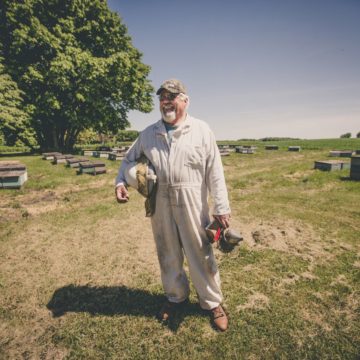
Darrel Rufer
“It’s not just where your honey comes from that matters. It’s who,” said Rob Buhmann, chair of the Sioux Honey Board. “Sioux Honey comes from beekeepers like Darrel Rufer who are producing top-notch Minnesota honey. These families are running solid operations and they are committed to making only the highest quality product.”
Beyond introducing local beekeepers through the campaign, the co-op is advocating for consumers to look at the label when buying honey, know who and where it comes from, and keep an eye out for the “Grade A” and “Product of the U.S.A.” designations. “Grade A” is the highest grade awarded by the UDSA and “Product of the U.S.A.” is a guarantee of the country of origin. Combined, the labels confirm honey is pure, with nothing added, and of the highest quality, according to Buhmann.
“Sue Bee is synonymous with quality and with values, high values,” Rufer said. “I know a lot of Sioux Honey members, and they’re all the same. It’s not about seeing how much money you can make, or how fast. Beekeeping is not big agriculture. Beekeeping is big families. A lot of brothers, sons, dads, grandfathers. That’s why it’s a generational thing. It’s a lifestyle.”
Rufer appears at the beginning of the nationwide ad which highlights the challenges of beekeeping and the persevering nature of America’s beekeepers.
“Beekeeping is a hard job,” Rufer said. “There are no days off. When it’s time to work, you have to work. You have to take care of the bees, you have to have a lot of drive to keep your bees alive, otherwise the bees will not be able to take care of you.”
Rufer previously worked as a chef at a fine-dining restaurant in Minneapolis. After finishing a midday lunch rush on a day in 1977, Rufer took home a swarm of bees he found hanging on a tree outside of the restaurant. That first hive grew to a hobby which then became a commercial venture in less than a year. Today, Rufer’s Apiaries, Inc. is among the top honey producers in the Sioux Honey Co-Op, with more than 5,500 colonies of honeybees in Minnesota and South Dakota.
As a co-op, not a corporation, Sioux Honey Association was formed to operate based on what’s best for its beekeepers, its honey and its customers. Established in Sioux City, Iowa, in 1921, the co-op distributes pure, “Product of the U.S.A.,” Grade A honey to retailers nationwide on behalf of its 200+ independent beekeeper members. From classic Sue Bee® honey to unfiltered Aunt Sue’s® honey, the co-op has a honey for every preference and use.
Arkansas Beekeeper Featured In ‘Who Does Your Honey Come From’ Drive

David Coy
An Arkansas beekeeper is being featured in a national drive for Americans to know who their honey comes from. Amongst its 200+ members, Sioux Honey Association Co-op selected David Coy of Jonesboro to be a face of the “Who Does Your Honey Come From” campaign, which started December 17, 2018.
“It’s not just where your honey comes from that matters. It’s who,” said Rob Buhmann, chair of the Sioux Honey Board. “Sioux Honey comes from people like the Coys who are producing top-notch Arkansas honey. These families are running solid operations and they are committed to making only the highest quality product.”
Beyond introducing local beekeepers through the campaign, the co-op is advocating for consumers to look at the label when buying honey, know who and where it comes from, and keep an eye out for the “Grade A” and “Product of the U.S.A.” designations. “Grade A” is the highest grade awarded by the UDSA and “Product of the U.S.A.” is a guarantee of the country of origin. Combined, the labels confirm honey is pure, with nothing added, and of the highest quality, according to Buhmann.
“With Sioux Honey, we know we have a home for our honey, so we don’t have to worry about going out and trying to sell it,” said Coy. “And there is an ownership there. We’re one of the owners. And as owners we can make sure the standards are up where they should be – the testing, the oversight – it matters.”
Coy appears at the end of the nationwide ad which highlights the challenges of beekeeping and the persevering nature of America’s beekeepers.
“Now, there are days when I ask, ‘Why am I doing this?’ The days when you get stung a lot. But those times don’t last,” said Coy.
Along with his parents and brother, Richard, David Coy runs Coy’s Honey Farm. The business was established in 1969 by David’s father, Bobby, who began the venture as a hobby. The business has grown to 12,000 hives and 20 full-time employees, and has collected around 1.1 million pounds of honey each year over the past 10 seasons.
As a co-op, not a corporation, Sioux Honey Association was formed to operate based on what’s best for its beekeepers, its honey and its customers. Established in Sioux City, Iowa, in 1921, the co-op distributes pure, “Product of the U.S.A.,” Grade A honey to retailers nationwide on behalf of its 200+ independent beekeeper members. From classic Sue Bee® honey to unfiltered Aunt Sue’s® honey, the co-op has a honey for every preference and use.
Idaho Beekeepers Featured In ‘Who Does Your Honey Come From’ Drive
Two Idaho beekeepers are being featured in a national drive for Americans to know who their honey comes from. Amongst its 200+ members, Sioux Honey Association Co-op selected Bob and Michael Newswander of Preston to be faces of the “Who Does Your Honey Come From” campaign, which started December 17, 2018
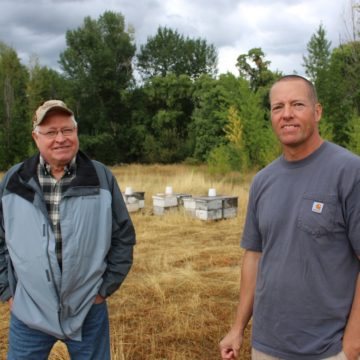
Bob and Michael Newswander
“It’s not just where your honey comes from that matters. It’s who,” said Rob Buhmann, chair of the Sioux Honey Board. “Sioux Honey comes from people like the Newswanders who are producing top-notch Idaho honey. These families are running solid operations and they are committed to making only the highest quality product.”
Beyond introducing local beekeepers through the campaign, the co-op is advocating for consumers to look at the label when buying honey, know who and where it comes from, and keep an eye out for the “Grade A” and “Product of the U.S.A.” designations. “Grade A” is the highest grade awarded by the UDSA and “Product of the U.S.A.” is a guarantee of the country of origin. Combined, the labels confirm honey is pure, with nothing added, and of the highest quality, according to Buhmann.
“Our philosophy is to give the bees all of our attention,” Bob Newswander said.
Bob operates Newswander Apiaries along with his son Michael who quit his engineering job to join the family business. His family joined the co-op in 1970 to get their honey to the market and allow them to focus on taking care of the bees.
Both Bob and Michael appear in the middle of the nationwide ad which highlights the challenges of beekeeping and the persevering nature of America’s beekeepers.
“There’s nothing like working for yourself and dealing with a wonderful creation of nature,” Michael Newswander said. “I don’t know what’s better than being outside digging in a beehive, building beehives, pulling the honey off at the end of the year.”
Newswander Apiaries manages 8,000+ beehives that are spread out across southeastern Idaho and northern Utah, with their base of operations in Preston, Idaho, in the Cache Valley.
As a co-op, not a corporation, Sioux Honey Association was formed to operate based on what’s best for its beekeepers, its honey and its customers. Established in Sioux City, Iowa, in 1921, the co-op distributes pure, “Product of the U.S.A.,” Grade A honey to retailers nationwide on behalf of its 200+ independent beekeeper members. From classic Sue Bee® honey to unfiltered Aunt Sue’s® honey, the co-op has a honey for every preference and use.
N.D. Beekeepers Featured In National ‘Who Does Your Honey Come From’ Drive
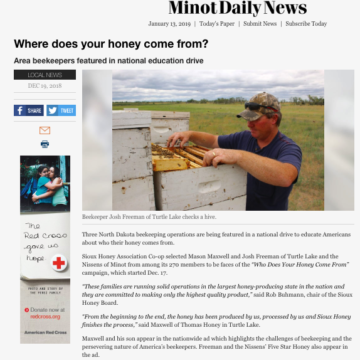
Three North Dakota beekeeping operations are being featured in a national drive for Americans to know who their honey comes from. Amongst its 200+ members, Sioux Honey Association Co-op selected Mason Maxwell and Josh Freeman of Turtle Lake and the Nissens of Minot to be faces of the “Who Does Your Honey Come From” campaign, which started December 17, 2018.
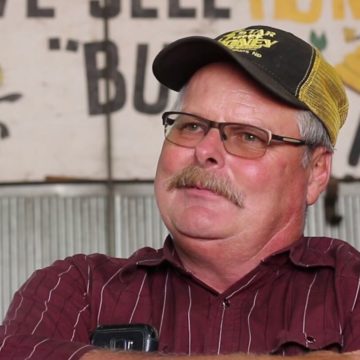
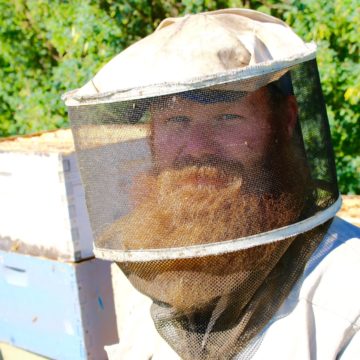
Will Nissen
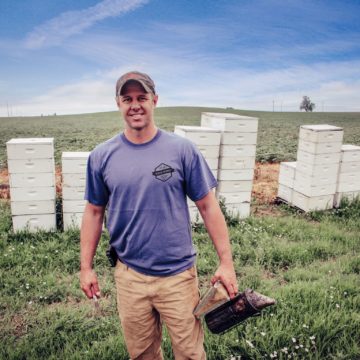
Matt Nissen
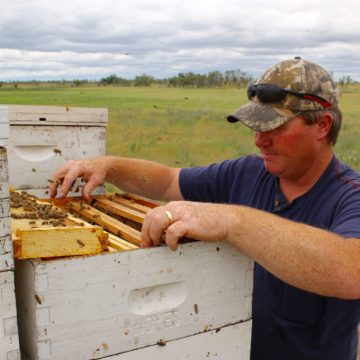
Mason Maxwell
Josh Freeman
“It’s not just where your honey comes from that matters. It’s who,” said Rob Buhmann, chair of the Sioux Honey Board. “Sioux Honey comes from the Nissens, the Maxwells and the Freemans who are producing top-notch North Dakota honey. These families are running solid operations in the largest honey-producing state in the nation and they are committed to making only the highest quality product.”
Beyond introducing local beekeepers through the campaign, the co-op is advocating for consumers to look at the label when buying honey, know who and where it comes from, and keep an eye out for the “Grade A” and “Product of the U.S.A.” designations. “Grade A” is the highest grade awarded by the UDSA and “Product of the U.S.A.” is a guarantee of the country of origin. Combined, the labels confirm honey is pure, with nothing added, and of the highest quality, according to Buhmann.
“From the beginning to the end, the honey has been produced by us, processed by us and Sioux Honey finishes the process,” said Maxwell of Thomas Honey in Turtle Lake.
Along with Five Star Honey and Josh Freeman, Maxwell and his son appear in the nationwide ad which highlights the challenges of beekeeping and the persevering nature of America’s beekeepers.
Five Star Honey is a family-run business as well, named after Will Nissen, his wife Peggy, and their three boys – Matt, Levi and Evan. Both Will and Matt appear several times in the ad. All members of the Nissen family are actively involved in the day-to-day operations of Five Star Honey.
“I think my sons can see that there’s a future in bees, and it’s a good, solid future,” said Will Nissen.
As a co-op, not a corporation, Sioux Honey Association was formed to operate based on what’s best for its beekeepers, its honey and its customers. Established in Sioux City, Iowa, in 1921, the co-op distributes pure, “Product of the U.S.A.,” Grade A honey to retailers nationwide on behalf of its 200+ independent beekeeper members. From classic Sue Bee® honey to unfiltered Aunt Sue’s® honey, the co-op has a honey for every preference and use.
Sioux Honey Association Launches “Buy American” Product Campaign
Read more and listen to the interview at KSCJ.
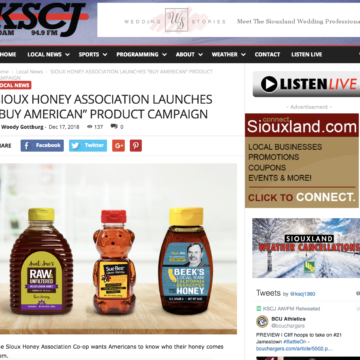
Sioux Honey Association launches information initiative
From Siouxland News, Fox44 Read full story on their website.
Siouxland foods to take center stage at USS Sioux City commissioning banquet
Read all about the USS Sioux City Commissioning Reception in Sioux City Journal
Whipped Rose Honey Hand Cream
Ingredients
1/2 cup organic extra virgin coconut oil
1/2 cup unrefined organic shea butter
3 tbsp Aunt Sue’s® Raw & Unfiltered Wildflower Honey
2 tsp organic pure vanilla extract
10 drops rose geranium essential oil
Directions
- Measure your ingredients and place them all into a double boiler.
- Melt ingredients over medium heat, mixing together.
- Cool completely (1 to 2 hours) in the refrigerator until the mixture becomes solid.
- Once solidified, mix in essential oils.
- Whip essential oils into the solid mixture with a hand mixer.
- Transfer to your glass jar for storage.
Big Island bees and Sioux Honey producer stung by natural disasters
Natural disasters stung Big Island bee colonies and harmed honey production and hives.
Read the full story at Hawaii ‘s ABC channel KITV Island News.